Portfolio Collection
Drapery
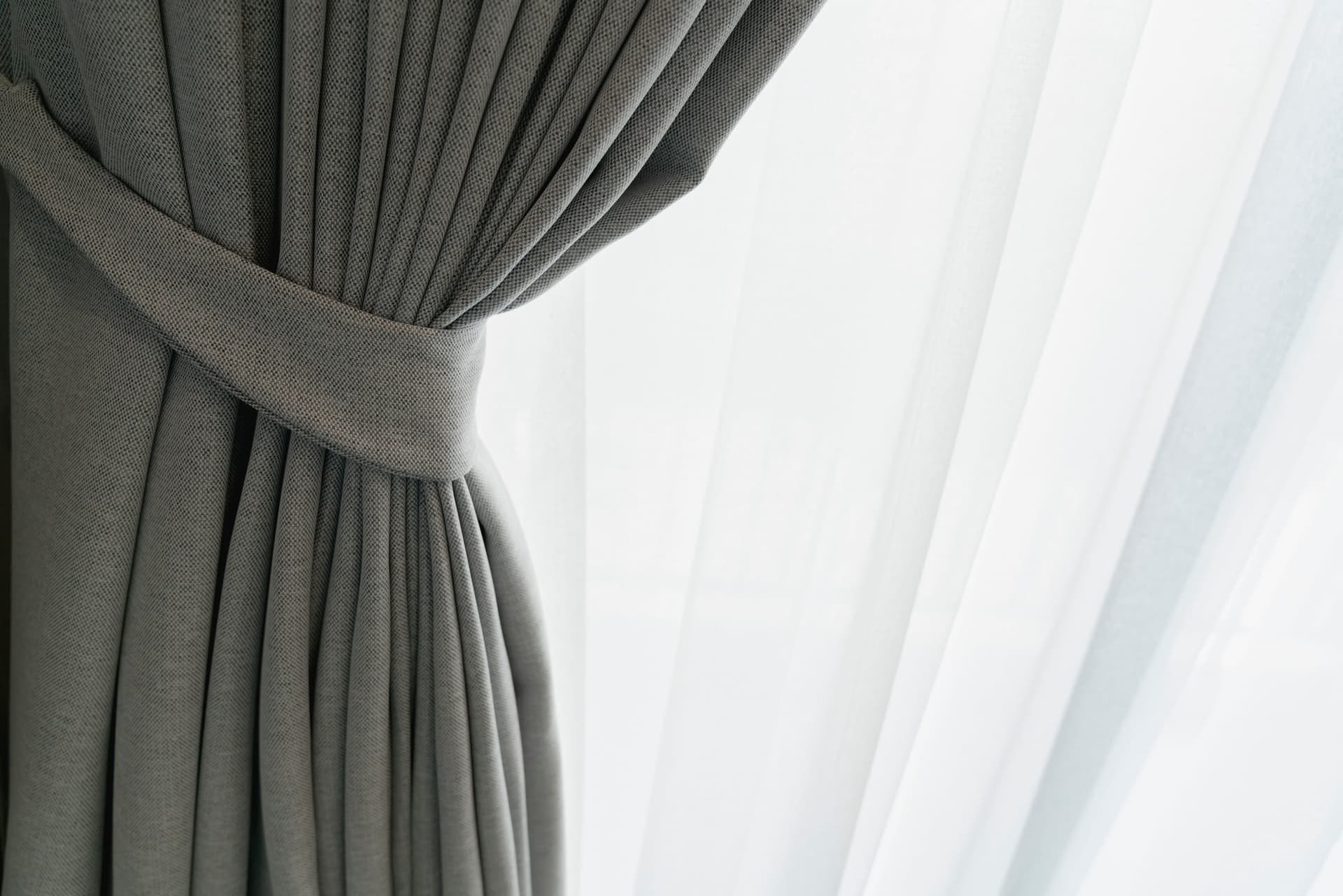
Fabric with weight and movement.
Drapery does something a shade cannot. It softens a hard opening, it absorbs sound, and it reads as furnishing rather than as hardware.
It also layers. A drapery panel beside a roller or cellular shade gives a room daytime light control and an evening presence, without either treatment doing both jobs badly.
- Portfolio Collection
- Hardware and panels, specified together or separately.
- Made to measure
- Cut and finished to the opening, with no standard sizes.
- Layers with shades
- Specify alongside a roller or cellular shade on the same window.
- Five-year warranty
- Five years, no questions asked, the same as the rest of the catalog.
- White label program
- Sell it as your own.
- Sold through dealers
- We never sell direct.
Hardware
and panels
Order the hardware and the panels together, so the rod, the carriers and the heading are matched to each other and to the opening. The alternative is panels on their own, which suits a project where the hardware is already specified or is being supplied by someone else.
Become a dealerOneway and
splitdraw
A oneway rod draws the whole treatment to a single side, which is what a door or a window with wall on only one side usually wants. A splitdraw rod parts in the middle and stacks to both sides, which suits a symmetrical opening and keeps the view centered when the drapery is open. The choice is driven by the opening, not by preference.
Specifying
with shades
Drapery is most often specified with a shade rather than instead of one. The shade does the daytime work, glare and privacy, and the drapery does the evening work and the softening. Talk to us early if a project layers them, because the mounting depth and the stack allowance need to be agreed before either is ordered.
Talk to us earlySpecified here.
Short lead times, and one team answering for the work.